
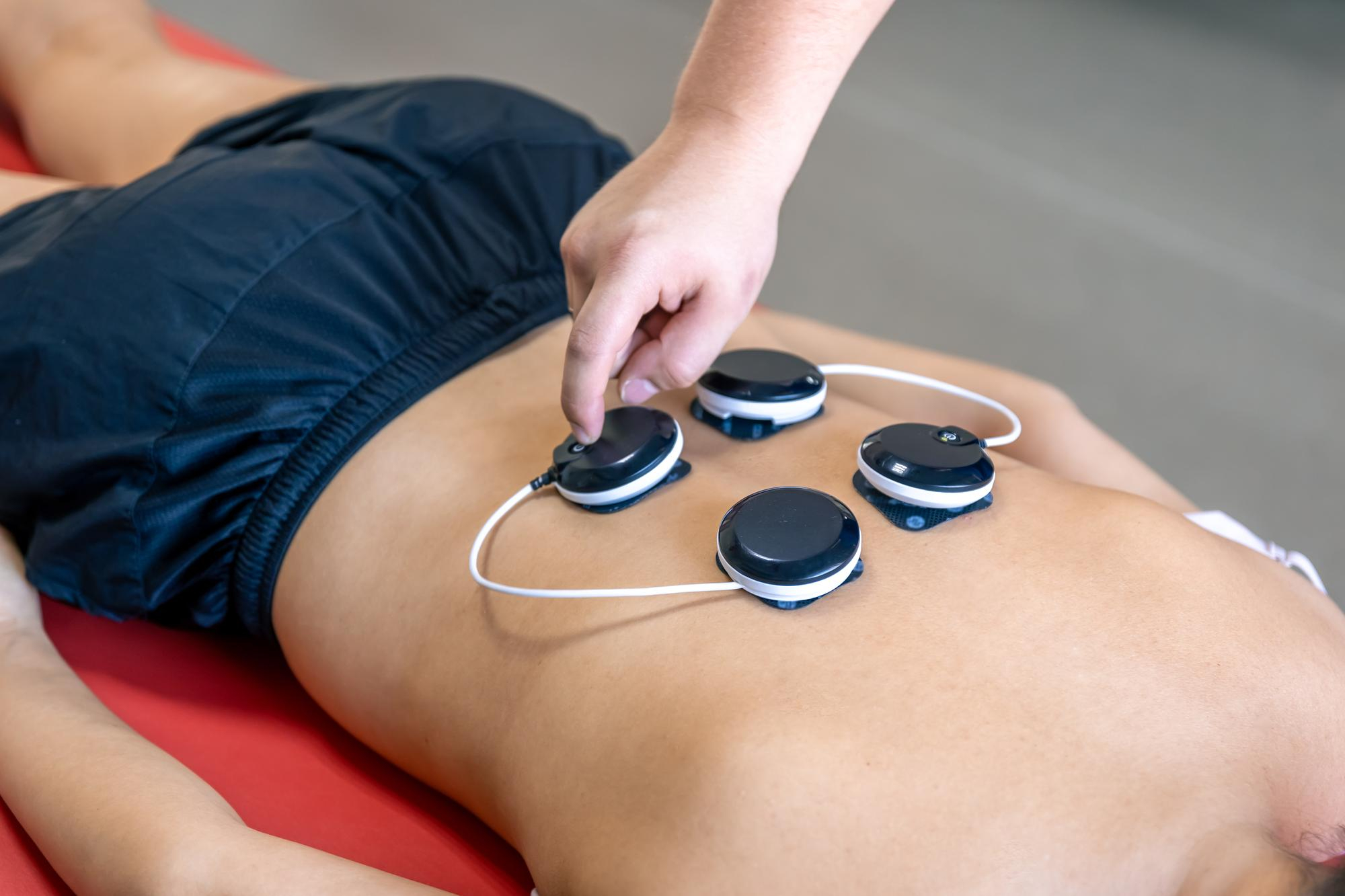
Multifidus stimulation is an advanced, restorative neurostimulation therapy designed for chronic lower back pain linked to dysfunction of the multifidus muscle — one of the deep muscles that plays a key role in stabilising the spine. Unlike treatments that primarily mask pain signals, multifidus stimulation is designed to address an underlying mechanical cause of chronic low back pain: poor activation and control of this important stabilising muscle.
Dr. Kavita Poply offers a structured, assessment-led approach to multifidus stimulation, helping patients with mechanical, function-related low back pain who haven’t found lasting relief through conventional treatment.
What is Multifidus Stimulation?
The multifidus is a deep spinal muscle that runs along the length of the spine and plays a crucial role in providing segmental stability, particularly during movement. Following an episode of low back pain, this muscle can develop ongoing inhibition or weakness — meaning it doesn’t activate properly even after the original pain has settled — which can perpetuate a cycle of instability and recurring pain.
Multifidus stimulation uses a small implantable device that delivers programmed electrical stimulation to the nerve supplying the multifidus muscle, prompting it to contract during short daily sessions. Over time, this repeated, targeted activation is designed to help restore normal muscle function and improve spinal control, addressing the underlying issue rather than only managing symptoms.
Conditions Treated
- Chronic mechanical low back pain linked to multifidus muscle dysfunction
- Recurrent low back pain with associated muscle weakness or instability
- Persistent low back pain that hasn’t responded adequately to physiotherapy or medication
- Postural or activity-related back pain connected to poor core muscle activation
Symptoms That May Require This Treatment
- Chronic lower back pain lasting many months, often following an initial injury or episode
- Pain that worsens with prolonged sitting, standing, or activity
- A sense of instability or “giving way” in the lower back
- Reduced core strength or difficulty engaging deep back muscles despite physiotherapy
- Limited or short-lived improvement from standard physiotherapy or pain medication
How the Treatment Works
Multifidus stimulation is typically introduced after a thorough assessment confirms that multifidus dysfunction is a significant contributor to the patient’s back pain, often following a period of physiotherapy that hasn’t produced the expected improvement in core muscle control. Suitable patients undergo a minor procedure to implant thin electrodes near the nerve supplying the multifidus muscle, connected to a small implantable pulse generator. Patients then use the device for brief, programmed stimulation sessions each day, gradually helping to retrain and strengthen the muscle over a period of months.
Our Approach to Treatment
Comprehensive Assessment
A detailed evaluation, including assessment of core and multifidus muscle function, to confirm this therapy is appropriate and likely to be of benefit for the specific pattern of back pain present.
Personalised Treatment Plan
The stimulation programme is tailored to the individual, with settings and session length adjusted over time based on the patient’s response and progress.
Procedure Overview
- Minimally invasive implantation procedure, typically performed as a day case
- Thin leads are placed near the nerve supplying the multifidus muscle, with the device implanted under the skin
- Programmed stimulation sessions are carried out briefly each day, typically at home
- Performed and monitored under specialist guidance throughout the treatment course
- Most patients can gradually return to normal activities within a short period following implantation
- Benefit generally builds progressively over several months as muscle function improves
Benefits of Multifidus Stimulation
- Targets an underlying mechanical cause of chronic low back pain, rather than only masking symptoms
- Can improve spinal stability and reduce recurrence of pain episodes
- Minimally invasive, with the potential for long-term benefit
- Complements, rather than replaces, a broader rehabilitation approach
- May reduce reliance on long-term pain medication for suitable patients
Why Choose Expert Care?
Careful patient selection is essential for multifidus stimulation — it’s specifically suited to patients whose chronic low back pain is linked to multifidus dysfunction, rather than a general treatment for all causes of back pain. With a patient-centred approach, Dr. Kavita Poply ensures thorough assessment before recommending this therapy, and provides ongoing, personalised support throughout treatment.
Book Your Consultation
If chronic lower back pain has persisted despite physiotherapy and other treatments, multifidus stimulation may offer a targeted, long-term option. Book your consultation today to find out if you’re a suitable candidate.
Frequently Asked Questions
Q.1 Who is a suitable candidate for multifidus stimulation?
Ans. It’s generally considered for patients with chronic mechanical low back pain linked to multifidus muscle dysfunction who haven’t achieved lasting improvement with physiotherapy or standard pain management, following a detailed specialist assessment.
Q.2 How long does it take to see results from multifidus stimulation?
Ans. Because the treatment works by gradually retraining the muscle, benefit typically builds progressively over a period of months rather than appearing immediately after the device is implanted.
Q.3 Is multifidus stimulation a replacement for physiotherapy?
Ans. No, it’s generally used to complement a broader rehabilitation approach, addressing muscle activation issues that may not fully resolve with physiotherapy alone.
Q.4 Is the device permanent, and can it be removed?
Ans. The device is designed for long-term use in suitable patients, though as with other implantable neuromodulation devices, it can be addressed or removed by a specialist if ever necessary.