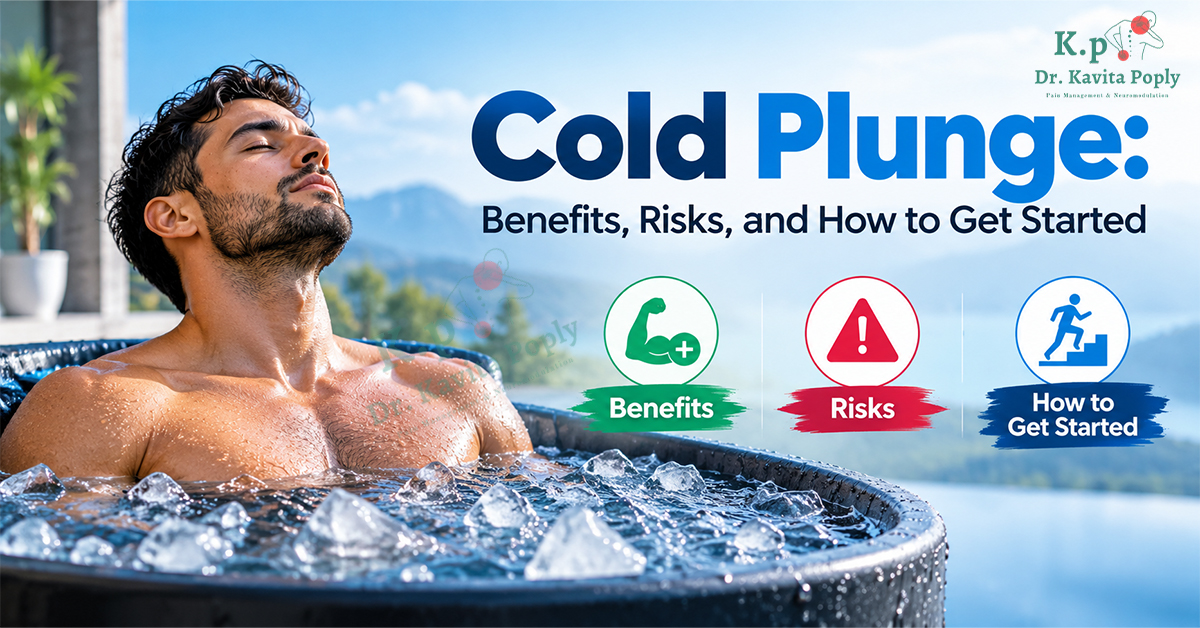
Cold plunge has swiftly reached wellness centres, home bathrooms and gyms from being an elite sport or winter swimming. It is about immersing the body in cold water for a short span and allowing the body to respond to temperature. It has been researched that it provides certain benefits related to immunity, mood and long-term health. But there are certain cardiovascular and respiratory challenges as well, therefore, it should be practiced under guidance of a certified practitioner.
Cold Plunge: What Is It?
A cold plunge means cold-water immersion in which an individual sits or immerses in the cold water. The time period can be short or long depending upon the health condition and tolerance level. It can be done in a cold-plunge tub filled with cold water. The temperature may vary but is generally set to 15°C (59°F) or below.
How Does Cold Plunge Therapy Work?
As soon as the body is immersed in the cold water, it responds to the sudden temperature change. The blood vessels constrict, blood flow reduces, and the heat is conserved around the vital body organs. The blood pressure, heart rate and breathing rise rapidly which is called the cold-shock response. As the exposure continues, the body begins to lose heat.
Potential Benefits of Cold Plunging
One of the best cold plunge benefits is that it helps in exercise recovery. There have been researches which proved that cold-water immersion reduces muscle soreness, and helps with short-term recovery after exercise. It is known to improve endurance, strength, sleep, mood and overall well-being. It has been proven to be an effective treatment for stress, anxiety, depression, and chronic disease.
Cold Plunge for Muscle Recovery and Exercise
Cold plunging helps athletes relax, recover, and reduce their muscle soreness. It is followed by many between training sessions which are to be closely followed. It helps in building endurance and with rapid recovery after exercise. However, when an individual uses the cold-water immersion therapy repeatedly after resistance training, it is likely to interfere with the adaptations required for muscle growth.
There have been researches which proved that the attenuation of muscle hypertrophy and anabolic signalling with post-exercise cold plunge have suggested that it may lead to reduction in the strength adaptations. Therefore, it might not be a good choice for those who are doing strength training.
You Can Also Read: Actinic Keratosis: Symptoms, Causes, Treatment & Prevention
Cold Plunge and Mental Wellbeing
Many individuals have experienced freshness and improved mental strength after the cold plunge. The sudden cold stimulus activates the body’s response system towards stress which helps in creating alertness. While for some people, the experience can provide a sense of accomplishment, to others, it may help in establishing a consistent routine.
How to Start Cold Plunging as a Beginner
Wondering how to do a cold plunge? Well, if you are trying cold plunge for the first time then you should avoid getting in extremely cold water. You should always start by immersing in mild cold water and get your body accustomed to it gradually. You may also try beginning with a cold shower rather than full body immersion.
Here are certain factors which should be considered while performing cold plunge for beginner.
- Get in the water slowly, do not jump.
- Keep your face and head out of the cold water.
- Sit calmly and try to control your breathing.
- Start by immersing for a short span.
- Have a bit warm and dry clothes before you enter.
- Do not perform it when you are alone.
- Stop immediately, if you feel confused, weak or unwell.
The first few seconds or minutes are extremely challenging because of the cold plunge response. The sudden immersion may lead to involuntary gasping and sudden changes in heart rate, breathing and blood pressure.
What Temperature and Duration Are Recommended?
There is no fixed or single cold plunge temperature or duration which is best for all. There are different ranges that are used as per tolerance and health condition. However, healthy adults can immerse in water with temperatures from 7°C to 15°C for 30 seconds to about 2 hours.
Don’t know how long to stay in a cold plunge? Well, if you are a beginner then you should start by immersing in mildly cold water for a short span of time. Once your body gets used to it then you can minimize the temperature or increase the session duration.
Cold Plunge vs Ice Bath: What’s the Difference?
Both the terms cold plunge and ice bath are used interchangeably and there is no accepted distinction as such. A cold plunge refers to immersing in cold water while an ice bath refers to immersing in a tub filled with cold water and ice. The name majorly indicates to the water temperature, duration and extent of immersion.
Risks, Side Effects and Who Should Avoid Cold Plunges
Cold plunge comes with its challenges and side effects. One of the most common immediate issues or cold plunge risks is the cold-shock response. The sudden immersion can lead to increased heart rate, rapid breathing and rise in the blood pressure. If the individual immerses the face after the initial gasp the there is a risk of inhaling water which can make the situation harmful.
Further, prolong exposure to the cold water can lead to impaired coordination, excessive cooling or hypothermia. The body starts removing body heat faster than the air which can be dangerous. If you have cardiovascular or any other health issues then you should be cautious and perform it under a certified practitioner only.
Who Should Avoid Cold Plunge Therapy?
Any person with medical condition should consult a healthcare professional regarding trying cold plunge.
People who have following issues should be cautious.
- Cardiac issues or a history of heart disease.
- Uncontrolled high blood pressure.
- Blood circulation issues.
- Any heart-rhythm disorder.
- Issues related to body temperature regulation.
People who are taking medicines that may affect the heart rate or blood pressure may require medical advice for trying a cold plunge. The American Heart Association has cautioned people with cardia issues to avoid it or be extremely careful. Children and elderly people should also take care of the temperature regulation.
Cold Plunge Safety Tips for Beginners
Are you a beginner who is trying cold plunge for the first time? Well, here are some safety tips to help you.
- Never cold plunge alone. Always have another person when you are new to this practice.
- Avoid opting for extreme temperatures. Always begin with a cold plunge with mild temperature.
- Control your breathing and try to be calm as soon as you enter the plunge.
- Try to keep the sessions short at first, you can gradually increase the duration.
- Remove wet clothing as soon as you step out, dry yourself and get into a warm environment.
- Always listen to your body and follow the indications.
- Seek medical help whenever you feel unwell.
Conclusion
Cold plunging has become a preferred addition to the fitness routine but it should not be considered as a miracle therapy. It majorly helps with the short-term exercise recovery and reduces the muscle soreness. It may also assist in reducing stress, anxiety, curing sleep issues, and facilitate overall well-being. To get the best results, you must always consult a certified and experienced practitioner.
Dr. Kavita Poply is a pain management specialist in London who is known for offering advanced treatment for chronic pain, nerve-related conditions and migraine. She is known for her clinical excellence and advance knowledge. If you have been thinking of getting a cold plunge recovery then book a consultation now.
FAQs
Q.1 What is a cold plunge and how does it work?
Ans. A cold plunge is a short period for which body is immersed in cold water. When the body is put in sudden cold, the blood vessels constrict, and breathing, heart rate, and blood pressure increases. Eventually, the body continues to lose heat.
Q.2 What temperature should a cold plunge be?
Ans. There is no fixed ideal temperature for everyone. Generally, there is a broad range and the water temperature is at or below 15°C. The beginners should start gradually and must avoid extremely cold plunge immediately.
Q.3 How long should you stay in a cold plunge?
Ans. There is no fixed duration to stay in a cold plunge. However, for a beginner, a short span is suggested.
Q.4 Are cold plunges safe for everyone?
Ans. No. Sudden cold immersion increases cardiovascular stress and can lead to issues such as breathing difficulty, cold shock, or hypothermia. People who have cardiovascular issues or other medical conditions should consult a specialist first.
Q.5 How often should you do a cold plunge?
Ans. It depends from person to person and there is no single number for everyone. The frequency depends on the tolerance health, goal and training schedule of the individual.