
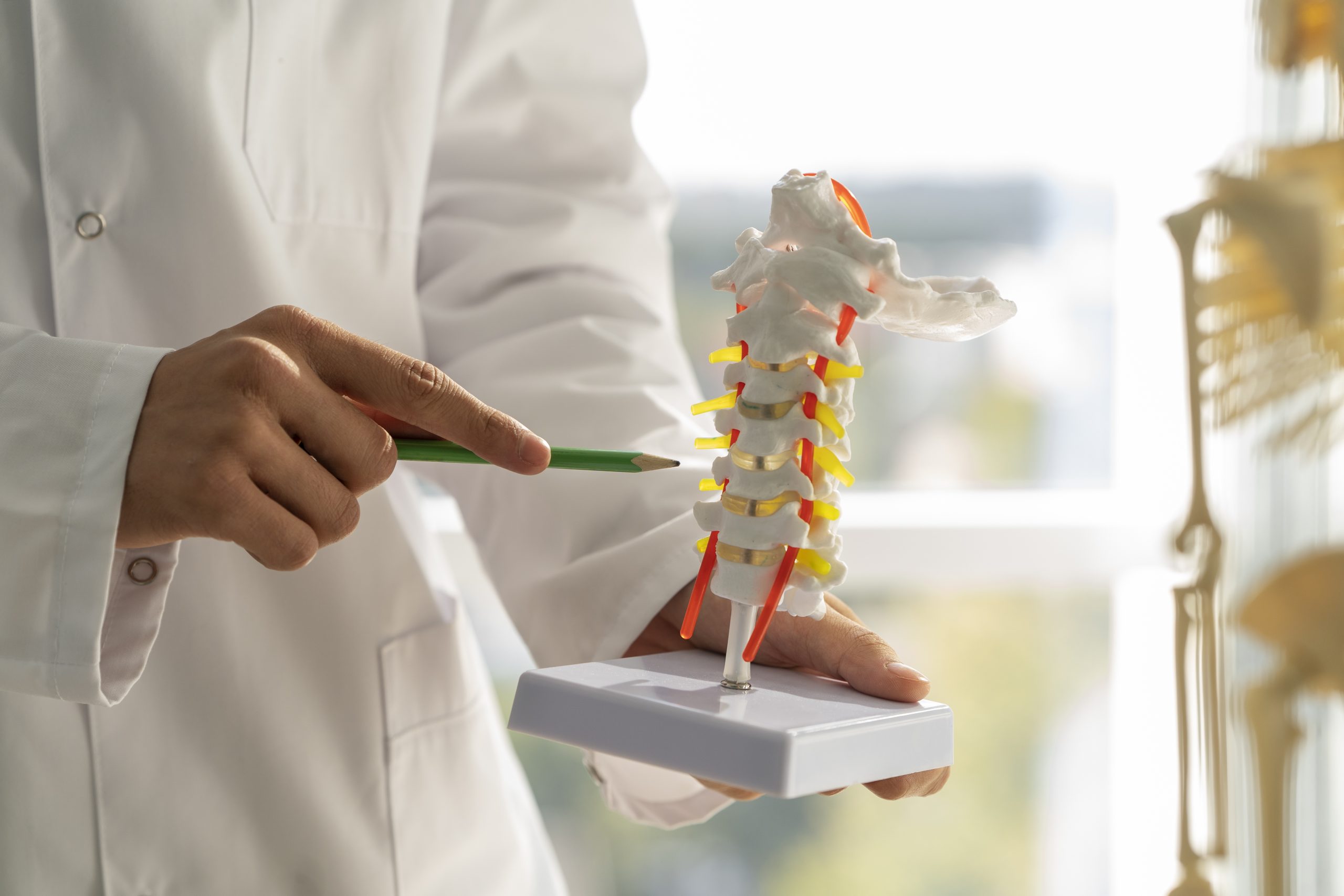
Osteoarthritis (OA) is the most common form of arthritis, developing as the protective cartilage that cushions the ends of bones gradually wears down over time. While it’s often thought of as a “joint” condition affecting the knees or hips, osteoarthritis frequently affects the spine as well — particularly the small facet joints between the vertebrae — and can be a significant, under-recognised source of chronic back pain and neck pain.
Whether osteoarthritis is affecting your spine, knees, hips, or shoulders, the impact on mobility and quality of life can be considerable if left unmanaged. Dr. Kavita Poply offers a comprehensive, targeted approach to diagnosing and treating osteoarthritis pain, combining accurate diagnosis with a full range of pain management options.
What is Osteoarthritis?
Osteoarthritis occurs when the smooth cartilage covering the ends of bones within a joint gradually breaks down, leading to increased friction, inflammation, and eventually bone-on-bone contact in more advanced cases. In the spine, this process affects the small facet joints that guide spinal movement; in peripheral joints such as the knee, hip, or shoulder, it affects the main weight-bearing or mobile joint surfaces.
As cartilage wears down, the body’s attempt to repair the joint can lead to bone spurs (osteophytes), joint space narrowing, and stiffness — all of which contribute to the pain and reduced mobility associated with OA.
Causes and Risk Factors
- Age, since cartilage naturally wears with cumulative joint use over decades
- Previous joint injury, including fractures or ligament injuries
- Repetitive joint strain, from certain occupations or sports
- Being overweight, which increases load on weight-bearing joints, particularly the knees and spine
- Genetics, with some people predisposed to earlier or more widespread OA
- Joint misalignment or abnormal biomechanics
Symptoms of Osteoarthritis
- Joint or spinal pain that worsens with activity and improves with rest
- Stiffness, particularly after waking or after periods of inactivity
- Reduced range of movement in the affected joint or spinal segment
- A grinding, clicking, or crunching sensation (crepitus) during movement
- Swelling around the affected joint
- For spinal OA specifically: localised back or neck pain, sometimes with stiffness that eases as the day goes on
How We Diagnose Osteoarthritis
Diagnosis begins with a detailed clinical history and a physical examination assessing joint or spinal movement, tenderness, and any signs of swelling or deformity. X-rays are typically used to confirm the diagnosis, showing characteristic changes such as joint space narrowing and bone spurs, while MRI may be used in the spine to assess facet joint changes more precisely or to check for any associated nerve involvement. This clear diagnostic picture allows treatment to be targeted at the specific joint or spinal level responsible for symptoms.
Our Approach to Treatment
Comprehensive Diagnosis
A thorough clinical and imaging-based assessment to confirm osteoarthritis, identify the affected joint(s) or spinal level, and rule out other contributing conditions.
Personalised Treatment Plan
Treatment is tailored to which joints are affected, the severity of degeneration, and the patient’s functional goals and activity levels.
Treatment Options
Pain Management: Targeted joint or facet joint injections to reduce inflammation and pain at the specific affected level.
Medication: Anti-inflammatory and pain-relief medication to manage flare-ups and support participation in rehabilitation.
Physiotherapy: Structured strengthening and mobility programmes, which play a central role in preserving joint function and reducing pain in osteoarthritis.
Lifestyle Modifications: Weight management guidance, activity modification, and joint-protection strategies suited to daily life and hobbies.
Advanced Treatment Options: For patients with persistent symptoms despite conservative measures, more advanced interventional pain management options may be considered as part of a longer-term plan.
What to Expect During Recovery
Osteoarthritis is a long-term condition, so treatment is generally framed around ongoing management rather than a single cure. Many patients experience meaningful pain relief and improved function within a few weeks of starting a combined physiotherapy and pain management plan, with periodic review to adjust treatment as needed. Staying as active as comfortably possible, rather than resting completely, is generally encouraged, since appropriate movement helps maintain joint function over time.
Why Choose Expert Care?
Because osteoarthritis can affect multiple joints and the spine simultaneously, and because its symptoms can overlap with other conditions, a specialist assessment helps ensure treatment is targeted correctly from the start. With a patient-centred approach, Dr. Kavita Poply provides thorough diagnosis and a full range of treatment options for spinal and joint osteoarthritis.
Book Your Consultation
If joint or spinal pain from osteoarthritis is affecting your mobility or daily life, a thorough assessment can help identify the most effective treatment path for you. Book your consultation today.
Frequently Asked Questions
Q.1 Is osteoarthritis the same as rheumatoid arthritis?
Ans. No. Osteoarthritis is a “wear and tear” condition related to cartilage breakdown, while rheumatoid arthritis is an autoimmune condition where the immune system attacks the joint lining. They require different diagnostic tests and different treatment approaches.
Q.2 Can osteoarthritis be reversed?
Ans. Cartilage damage itself cannot be fully reversed with current treatments, but pain, stiffness, and function can often be significantly improved through a combination of physiotherapy, weight management, and targeted pain management procedures.
Q.3 Does osteoarthritis in the spine always require surgery?
Ans. No, the majority of spinal osteoarthritis cases are managed successfully without surgery, using physiotherapy, lifestyle changes, and, where needed, targeted facet joint injections. Surgery is reserved for a smaller number of more severe or unresponsive cases.
Q.4 Will exercise make my osteoarthritis worse?
Ans. Generally, the opposite is true — appropriate, guided exercise helps strengthen the muscles supporting an arthritic joint and can reduce pain over time. High-impact or poorly guided activity, however, should be approached carefully, which is why a tailored physiotherapy programme is recommended.